Showing posts with label energy. Show all posts

Wednesday, November 28, 2012

Cultivate Characteristics of an Effective Organization


Lesson 7


Creativity: These days, many businesspeople hear the word creativity and automatically think of finances in the same way that stretching used to be something you only did during exercise.  The creativity I'm referring to is originality of thought and execution, which are becoming increasingly necessary in today’s business arena.  Creativity is the steam that powers the locomotive of progress.

When the heat’s on, the same old way of handling situations just won’t cut it any more.  The same old routines are probably what gets you into trouble.  Down pressures are changing in nature and intensity.  Up pressures are coming from the rapidly changing dynamics of a workforce with a new identity.  Lack of originality in thinking and behavior is a sign that you're vise is slowly closing in.

Energy: Any effective organization has an energy you can sense as soon as you enter the office.  Even if only one person is in the office at the time, you will still be able to feel it.  The thought might even pop into your head that this could be a fun place to work.  Andrew Carnegie, the great industrialist, said, "I've found there is little success where there is little laughter."

When you walk into the other kind of office, the one with low or no energy, you feel that too.  It’s like walking into a big refrigeration unit.  The chill makes you shiver.  Even if only one person is sitting there, you still feel the chill.  Some offices might as well have a sign on the wall that says: Fun is forbidden.  Anyone caught enjoying what they’re doing will be punished.

Where there is no fun, there is no energy.  How long does it take to detect energy or lack of it in an office?  Within five seconds, you can tell how much fun it is to work there.  Your customers can tell the same thing within five seconds of being greeted by one of your team members. 

Change: Change is what happens when you mix creativity and energy.  An effective organization is a changing organization.  I don’t say that the other way around because it is possible for management to change the look, the staff, the location, and a thousand other things about an organization in an attempt to artificially produce effectiveness.

Change that does not emerge from a healthy combination of creativity and energy will look, feel, and taste synthetic.  Creativity combined with energy produces change from within.  Changes imposed from outside feel like impositions.  Changes from within are self-regulated and guided by realism.  Here are three methods of building energy, creativity, and change:   

  • Analyze the steps used to solve a very difficult problem that you or a team member experienced in recent months.
  • Learn what "vibes" the average customer picks up when they initially meet any of your team members?
  • Identify a change you can initiate right now to make your organization more effective.

Tuesday, April 1, 2008

Danny Cox, The Accelerationist

My clients refer to me as “The Accelerationist”, 1: one who causes faster movement, higher efficiency and increased productivity, 2: one who boldly crosses barriers, 3: an adventurer at high speed

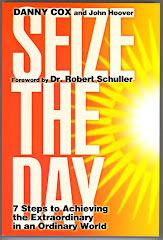
In future Blogs I will Post other articles from my three best selling books, Leadership When the Heat’s On Second Edition: Building A record Breaking Team, Seize The Day: Seven Steps To Achieving The Extraordinary In an Ordinary World and There Are No Limits: Breaking The Barriers In Personal High Performance.

This Post features my most popular article from Leadership When The Heat's On. You can find more information about my Keynotes and Seminars and also my books on my website at http://www.dannycox.com.

Ten Leadership Characteristics
By
Danny Cox

No organization can rise above the quality of its leadership. Because leadership is a position that must be earned day in and day out, there are important personal choices that both new and experienced leaders must make on a regular basis. Effective leaders are first and foremost effective people.

Personal ethics can't be separated from professional ethics. Therefore, the character of the leader is essential. The following list of ten characteristics is a valuable guide for quality living in addition to being critical criteria for leadership.

1. A high standard of personal ethics leads the list. Honest Abe Lincoln, who walked miles to return a customer's change, is a classic example of how personal ethics are reflected in professional conduct. Decisions made under pressure and/or temptation separate the great ones from the impostors.

2. High energy. Dealing with petty issues does not exhaust great leaders. These people know right from wrong as well as the difference between what's truly important and what's merely interesting.

3. The ability to work priorities shares equal importance with setting priorities. Many brilliant priority lists end up in the landfill of life. The difference between setting priorities and working them through is the difference between a dreamer and a doer.

4. Courage. The willingness to take risks and accept responsibility for the outcome is a consistent quality among effective leaders. Either you or your fears will control everything you do. An organization will be no bolder than the leader.

5. Committed and dedicated hard working leaders will eventually develop dedicated and hard working organizations regardless of who they start with or the experience they bring to the job.

6. Unorthodox leaders have an urge to create and don't have the patience to wait for a phone to ring before acting. Effective leaders are innovators who bore easily and prefer shaping tomorrow to repeating yesterday.

7. Great leaders have the goal orientation to make tough decisions. Goal orientation produces a drive and energy that shield us from the pain of the task. Keeping an organization focused increases efficiency.

8. Inspired enthusiasm is like the pilot light on the oven. Genuine enthusiasm is contagious. People look to their leaders for enthusiasm. The inspiration level of the organization is directly proportionate to the enthusiasm of the leader--be it high or low.

9. Level-headed people make realistic leaders who respond to problems rather than simply react. A leader who can stay cool under pressure inspires confidence among those in the organization and empowers them to do the same.

10. The desire to help others succeed is the mark of a truly great leader. Synergy is created when a leader truly invests his or her efforts in the success of others. Zig Ziglar says it like this, "People don't care how much you know until they know how much you care about them."

Whether you're trying to increase your own effectiveness as a leader or are trying to develop leadership talent within your organization, keep studying the characteristics of those you consider to be great leaders.

Remember that leadership is an art, not a science and the difference between a genuinely effective leader and a short-term motivator can be found in the personal decisions an individual makes when choosing how to live his or her life. Long-term commitment to the principles described above will produce an effective leader and, over time, an inspired organization.

Excerpted from Leadership When The Heat's On 2nd Edition
By Danny Cox (McGraw-Hill).