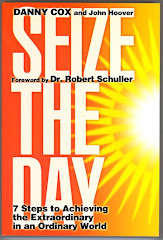
You’ve been invited to a mountain top cabin. You’re told to bring only a notebook and a pen. The men and women already there occupying the other chairs in the Great Room are starting a very lively discussion. The topics are facing challenges, innovation, courage, launching new ideas, etc.After furiously taking notes on what was said that evening your notebook would show some of the following nuggets:“Argue for your limitations and you get to keep them.”
—Richard Bach, author
“The only way to discover the limits of the possible is to go beyond them, to the impossible.”
—Arthur C. Clarke
“One of the great discoveries a man makes, one of his great surprises, is to find he can do what he was afraid he couldn’t do.”
—Henry Ford
“I’m looking for a lot of [people] who have an infinite capacity to not know what can’t be done.”
—Henry Ford
“Compared to what we ought to be, we are only half-awake.”
—William James, philosopher and psychologist
“We can achieve what we can conceive.”
—Elbert Hubbard
“Imagination is more important than knowledge.”
—Albert Einstein
“All serious daring starts from within.”
–Eudora Welty
“We want it all. From the instant we saw the birds flying, we wanted what the birds had. It’s intensely human to want it all. That’s how we recognize thresholds. They show us what we don’t have. We took what the birds had, but now we want the stars and every planet we’ve ever imagined...and the ones yet to be imagined. Thus, there will always be thresholds. We ask only the right to cross them.”
—From Threshold: The Blue Angels Experience, by Frank Herbert
“The faster I got, the smoother the ride. Suddenly the Mach needle began to fluctuate. It went up to .965 Mach—then tipped right off the scale. After all the anxiety, after all the anticipation, breaking the sound barrier, the unknown, was just a poke through Jell-O, a perfectly paved speedway, because the real barrier wasn’t in the sky, but in our knowledge and experience of supersonic flight.”
—From pilot Chuck Yeager’s autobiography, Yeager
“One can never consent to creep when one feels an impulse to soar.”
–Helen Keller
“An idea that is not dangerous is unworthy to be called an idea at all.”
—Elbert Hubbard
“A wish is a goal without any action attached to it.”
“Success is perseverance applied to a practical end.”
—Alexander Graham Bell
“A cheerful disposition is a fund of ready capital, a magnet for the good things of life.”
—Orison Swett Marden
The harder I work, the more I live. I rejoice in life for its own sake. Life is no brief candle to me. It’s a sort of splendid torch which I’ve got to hold up for the moment and I want to make it burn as brightly as possible before handing it on to future generations.”
—George Bernard Shaw
“If one stands up and is counted from time to time, one may get knocked down. But remember this: A man flattened by an opponent can get up again. A man flattened by conformity stays down for good. Follow the path of the unsafe, independent thinker. Expose your ideas to the dangers of controversy. Speak your mind and fear less the label of ‘crackpot’ than the stigma of conformity. And on issues that seem important, stand up and be counted at any cost.”
—Thomas J. Watson, business executive and first president of IBM
“Tough times never last but tough people do.”
—Dr. Robert H. Schuller
“Failure is only the opportunity to more intelligently begin again.”
—Henry Ford
“I know there is infinity beyond ourselves. I wonder if there is infinity within.”
—Charles Lindbergh (This is one of his last written notes. It was found on a nightstand next to his deathbed.)
“His mind is addled; he’s not worth keeping in school any longer.”
—Eight-year-old Thomas Edison’s grade-school teacher
“I never did a day’s work in my life. It was all fun.”
—Thomas Edison
“If we all did the things we are capable of doing, we would literally astound ourselves.”
—Thomas Edison
“Everything comes to him who waits—provided he hustles while he waits.”
—Thomas Edison
“I know this world is ruled by infinite intelligence.”
—Thomas Edison
“The day before the funeral.”
—Edison’s response to the question “When will you retire?”
“My message to you is: Be courageous! I have lived a long time. I have seen history repeat itself again and again. I have seen many depressions in business. Always America has come out stronger and more prosperous. Be as brave as your fathers before you. Have faith! Go forward!”
—Thomas Edison’s final public message, delivered during the depths of the Great Depression